Pokechill Lance Guide: Team Prep, Counters, and Mega Unlocks
A practical late-game checklist for players who are close to Lance but keep losing runs, timing evolutions badly, or rushing toward Mega systems before the team is stable.

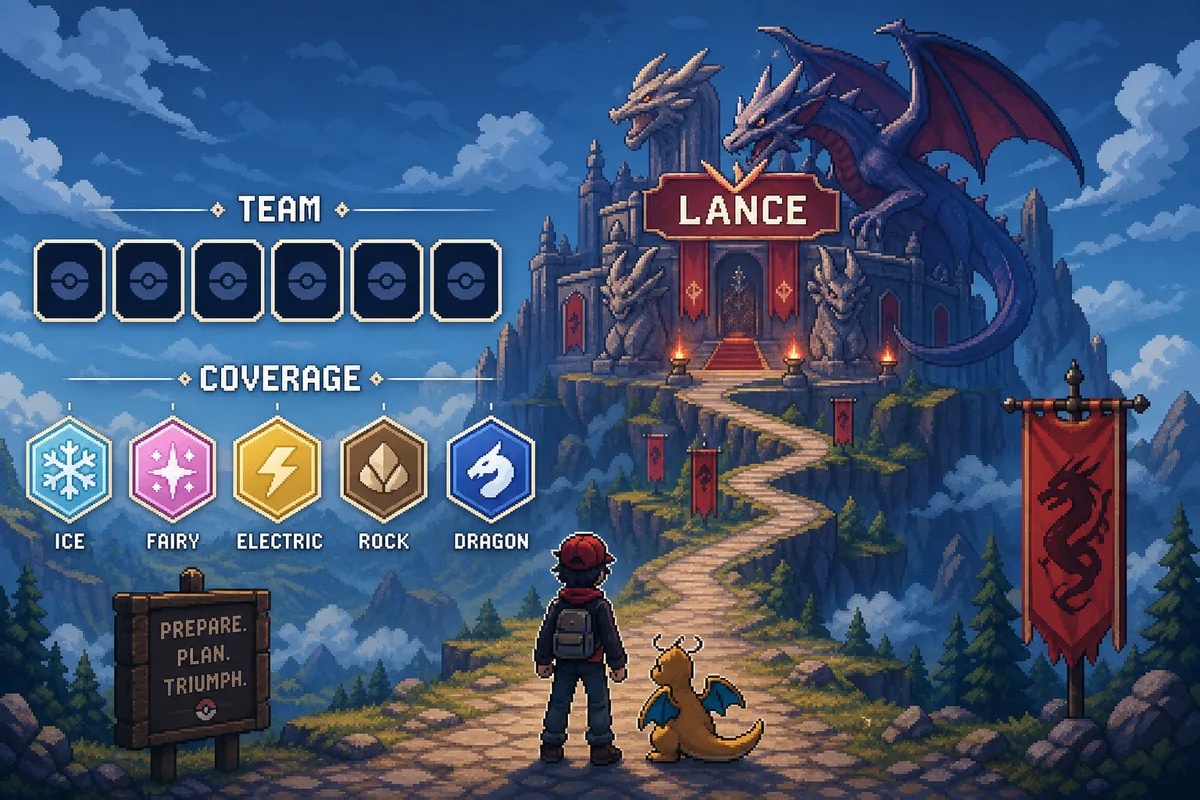
The Fast Verdict: Are You Ready for Lance?
You are ready for Lance when your team can clear the route before him without collapsing, your main damage dealer has enough speed or bulk to keep acting, and your backup slots are not just underleveled favorites. The search intent behind pokechill lance is usually very direct: players want to know what to change before the fight, not a full repeat of the entire Pokechill wiki.
The safest approach is to stop treating the fight as a single damage race. Lance pressure usually exposes three weak points: poor type coverage, low IV investment on the Pokemon you actually rely on, and too much faith in one starter line. If one knockout breaks the whole run, the team is not ready yet.
Use this guide together with the Pokechill Tier List, Evolution Chart, Faster Progress Guide, and Pokechill Wiki. Those pages cover rankings, level planning, farming loops, and system definitions; this page focuses on the Lance decision point.
Minimum goal
A six-slot team where at least four members can survive long enough to act, not one carry plus five passengers.
Coverage goal
Bring Ice, Dragon, Fairy, Electric, or strong neutral damage so dragon-heavy threats do not wall the run.
Resource goal
Spend IV and move resources on the Pokemon that will stay useful after Lance, not on temporary fillers.
Lance Readiness Checks Before You Push
Before attempting repeated Lance runs, do a short audit. Idle RPGs make it easy to overestimate progress because the screen keeps moving even when the team is inefficient. The checks below are more useful than asking for one perfect team list, because your available Pokemon, IV rolls, shiny luck, and Genetics state may be different from another player's save.
If two or more rows fail, go back to farming rather than forcing attempts. A failed attempt is useful once or twice for information; after that it becomes wasted idle time.
| Check | Ready Signal | Fix |
|---|---|---|
| Route stability | The route before Lance clears repeatedly without manual rescue. | Use the Auto Repeat Guide to test a safer loop first. |
| Level timing | Key Pokemon are evolved or close enough that another session will finish the timing. | Check exact stages in the Evolution Chart. |
| IV focus | Your main carry and one backup have meaningful IV investment. | Do not spread IV work across every caught Pokemon. |
| Move coverage | The team has a real answer to dragons and bulky neutral targets. | Inspect moves with right-click or long-press in the live game. |
| Save safety | You know where your browser save lives before long farming sessions. | Avoid private windows and do not clear site data before exporting when possible. |
Best Team Coverage for Lance in Pokechill
Lance preparation is less about copying a single roster and more about covering failure modes. A good Pokechill Lance team has one primary attacker, one dragon counter, one bulky stabilizer, one speed or status utility slot, and two flexible slots for your best available evolutions.
If you started Froakie and already have Greninja online, use it as a high-value offensive piece, but do not make every plan depend on it. Litten and Turtwig routes can still prepare well if their evolved forms are paired with better coverage and not asked to solve every matchup alone.
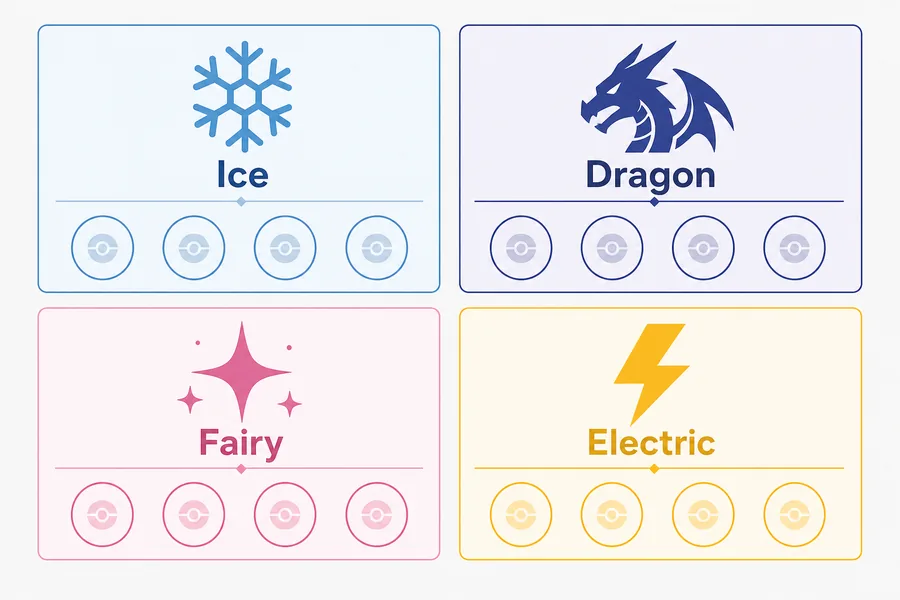
| Role | Need | Note |
|---|---|---|
| Primary carry | Reliable damage plus enough speed or bulk | Usually your best-evolved, best-IV Pokemon from the Tier List. |
| Dragon answer | Ice, Fairy, Dragon, or strong neutral pressure | This slot exists so dragon-heavy enemies do not decide the fight alone. |
| Stabilizer | Bulk, useful typing, or sustain-friendly stats | Battle fatigue rewards teams that can keep acting over longer fights. |
| Coverage backup | Electric, Water, Fire, or other missing type answer | Pick based on what your previous failed attempt could not break. |
| Utility slot | Status, speed control, or move flexibility | Useful when raw damage is close but not consistent. |
| Future slot | A Pokemon that remains useful after Lance | Avoid spending rare resources on a member you already plan to replace. |
A Practical Lance Battle Plan
Run one information attempt before heavy spending. Watch which team member falls first, whether damage is too low or too slow, and whether a specific type matchup is blocking the run. Then make one focused improvement instead of changing the whole roster.
The live game and public guide both emphasize inspectable information: right-click or long-press can reveal useful mechanics, moves, and team details. Use that habit before the fight so your plan is based on your actual save, not a generic comment thread.
- Scout once. Attempt the fight to identify the first failure point, then stop and fix that point.
- Farm safely. Use the highest route your team clears consistently rather than the hardest route you can barely survive.
- Commit resources narrowly. Improve one carry and one backup before investing in niche side projects.
- Retest after one change. Do not change six variables at once; you will not know what worked.
- Keep post-Lance value in mind. A team that only wins Lance once but cannot farm afterward is still inefficient.
What Lance Has to Do With Mega Unlocks
Similarweb keyword data showed related demand around pokechill unlock evry mega, which suggests players connect Lance with later Mega progression. The safe answer is conservative: do not assume Lance alone unlocks every Mega option. Treat him as a gate in your late-game path and verify the current in-game Mega Dimension, item, and trainer requirements before spending.
The live Pokechill interface exposes Mega Dimension language, training systems, items, and inspectable mechanics. Because the game can change, this guide avoids promising one fixed unlock chain. Instead, use Lance as the point where you stabilize a long-term team, then check Mega-related requirements in-game before choosing which Pokemon deserves rare investment.
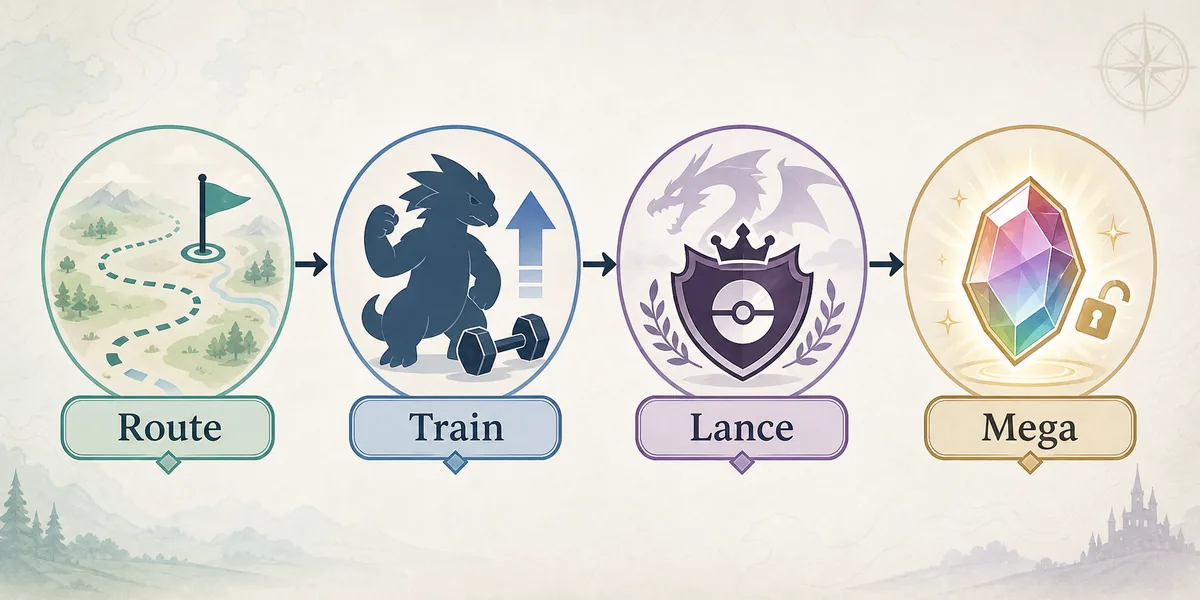
Mega planning rule
Beat Lance with Pokemon you are willing to keep improving; late-game unlocks punish rushed one-use teams.
Common Mistakes That Keep Players Stuck
Rushing one hard route
A route that gives more experience on paper can be slower if defeats, fatigue, or manual rescue interrupt it. Stable idle gain beats dramatic failed pushes.
Overbuilding a temporary Pokemon
If a Pokemon only solves one small problem and falls off immediately after Lance, keep its investment limited.
Ignoring move categories
Pokechill separates physical and special damage. If your strongest move uses the wrong attacking stat, the Pokemon may underperform despite a high level.
Forgetting browser-save risk
Long idle progress matters. Keep the same browser, avoid private mode, and export or protect data before risky cleanup.
Expecting a universal roster
Your best team depends on catches, IVs, shiny status, Genetics, and available evolutions. Use roles first, names second.
Sources and Media Notes
Keyword selection used GSC opportunity data for playpokechill.blog and Similarweb keyword evidence. GSC showed existing demand around Pokechill wiki and game terms, but those map to existing pages; Similarweb exposed the distinct pokechill lance cluster without a dedicated local page.
Gameplay mechanics were checked against the PokeChill Game Guide and the live Pokechill game interface. The public guide documents inspect controls, battle stats, moves, STAB, fatigue, shiny behavior, and Genetics; the live interface exposes team, training, items, trainers, Battle Frontier, and Mega Dimension labels.
No directly reusable official Lance screenshot or press-kit image was found during source checks. The three images on this page are therefore compressed editorial guide illustrations generated for explanation, not official gameplay screenshots.
Pokechill Lance FAQ
Last updated: June 23, 2026