Pokechill Best Team Guide: Build a Balanced Idle RPG Lineup
A practical team-composition guide for players who already know the tier list but need to decide which six Pokemon should actually run together in automatic battles.


The Best Pokechill Team Formula
The best Pokechill team is a lineup that clears automatic battles consistently, not a screenshot of six famous names. The Pokechill Tier List tells you which Pokemon have the highest ceiling; this guide explains how to combine them so your idle loop does not collapse when the zone changes.
Use this simple formula: one main carry, one secondary damage type, one bulky anchor, one speed or cleanup slot, one coverage specialist, and one flexible project slot. The exact Pokemon can change with your catches, IVs, shiny status, and Genetics plan. What should not change is the team logic.
For most players, Froakie into Greninja gives the smoothest carry path, but Litten and Turtwig can still anchor strong teams when you support their weaknesses. A high-IV A-tier Pokemon often beats a low-IV S-tier Pokemon that does not solve your current matchup.
Carry
Your fastest or hardest-hitting Pokemon, usually the one that clears normal idle battles.
Anchor
A durable Pokemon that keeps the run stable when the carry meets bad matchups.
Coverage
A slot chosen for missing types, not for personal preference or tier rank alone.
Project
A shiny, high-IV, or Genetics target that can become a future core member.
Recommended Pokechill Team Comps by Stage
Think in stages instead of copying one permanent dream team. Early game rewards easy evolution and balanced types. Mid game rewards coverage and IV checks. Late game rewards S-tier carries, Genetics planning, and specialist answers for hard zones.
The names below are templates. If you do not own one Pokemon yet, replace it with the same role: water carry, fire attacker, grass or ground answer, bulky tank, psychic or ghost damage, and flexible coverage.
| Stage | Recommended Core | Why It Works | Swap Rule |
|---|---|---|---|
| Early game | Starter + Pidgey line + Geodude line + one Water/Fire/Grass backup | Cheap evolutions and broad coverage matter more than perfect stats. | Replace only when the new catch covers a type weakness or has clearly better IVs. |
| Mid game | Greninja or starter final form + Gyarados + Golem/Torterra + Charizard/Incineroar + psychic or ghost slot | You need faster clears plus answers to Rock, Fire, Grass, Psychic, and bulky neutral enemies. | Promote Pokemon that solve repeated route failures, not Pokemon that are merely higher tier. |
| Late game | Greninja + Dragonite + Alakazam + Gengar + Gyarados + Machamp or flexible counter | This lineup balances speed, special damage, physical pressure, immunities, and broad type coverage. | Use Genetics and IVs to decide between similar roles; do not keep a weak host just because it is iconic. |
| Idle farming | Fast carry + reliable backup damage + bulky anchor + safe catch/project slots | Stable overnight progress needs fewer fainting spikes and fewer bad matchups. | Favor survival and consistency over the theoretical highest damage. |
Type Coverage Checklist for a Stable Team
A Pokechill best team should answer common matchup pressure before it chases luxury damage. If you repeatedly lose in an automatic route, the problem is usually missing coverage, low IVs, or too many fragile attackers in the same lineup.
Use the checklist below before spending rare resources. A team that covers more situations will usually farm better than a team built only around one favorite Pokemon.
| Coverage Need | Good Role to Add | What It Prevents |
|---|---|---|
| Water or Ground answer | Grass, Electric, or strong neutral damage | Getting stalled by Rock, Ground, Fire, or bulky route enemies. |
| Fire answer | Water or Rock pressure | Grass/Bug-heavy counters from forcing slow clears. |
| Psychic/Ghost answer | Dark, Ghost, or fast neutral damage | Fragile teams from losing to special burst or awkward immunities. |
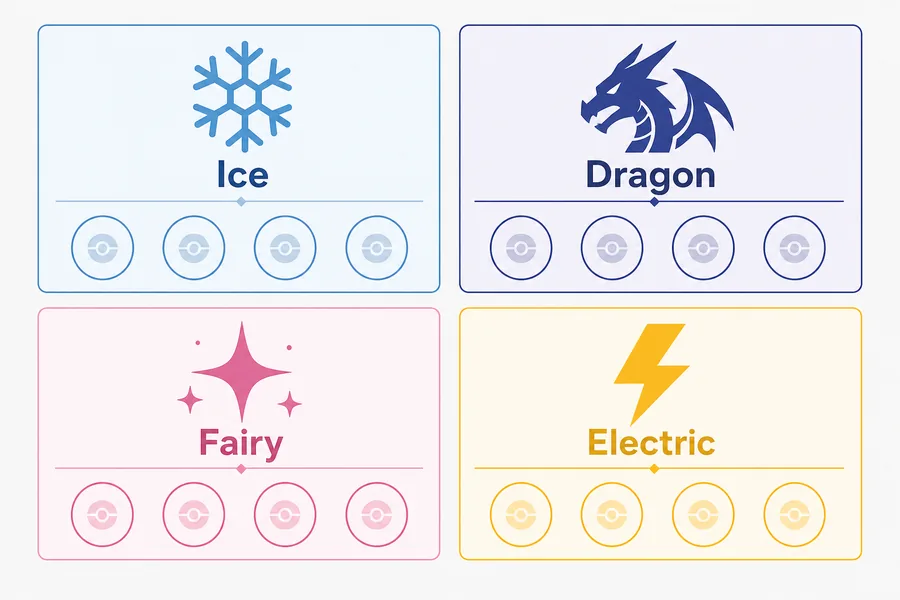
| Dragon or bulky neutral answer | Ice, Fairy, Dragon, or high-stat carry | Late-stage enemies from outlasting your normal damage loop. |
The Six Roles Every Good Team Needs
Do not fill six slots by tier rank alone. Assign jobs first, then choose the best Pokemon you actually own for each job.
- Main carry. The Pokemon that wins most normal fights quickly. Greninja, Dragonite, or another high-IV attacker can fill this job.
- Secondary attacker. A second damage type for routes where your carry is resisted or threatened.
- Bulky anchor. A Pokemon that survives awkward fights and gives the automatic loop time to recover.
- Coverage specialist. A role player chosen for one missing matchup, such as Electric, Rock/Ground, Ghost, or Fighting pressure.
- Speed or cleanup slot. A fast Pokemon that finishes weakened enemies before they can punish your team.
- Development slot. A shiny, high-IV candidate, or Genetics host you are testing before full investment.
When Should You Replace a Team Member?
Replacement is where many players waste progress. A new Pokemon is not automatically better because it appears on an S-tier list. It must either improve a weak matchup, clear faster at similar safety, or become a better long-term Genetics host.
Before replacing a trained Pokemon, compare current role, IV spread, evolution timing, and route performance. If the new Pokemon cannot answer a real problem, keep it as a project instead of breaking your stable team.
| Replace Now | Wait | Do Not Replace For |
|---|---|---|
| New Pokemon has better IVs and covers a failing matchup. | New Pokemon is strong but not evolved yet. | A cosmetic preference with worse stats and no role. |
| Current slot faints often in your target route. | Current slot is stable but a future S-tier is close. | Copying a dream team before you can support it. |
| Genetics plan makes the new host clearly stronger. | You still need the old Pokemon for type coverage. | Using rare resources before checking multiple candidates. |
How IVs and Genetics Change the Best Team
IVs and Genetics are the reason no best-team list should be treated as permanent. A high-IV Machamp, Golem, or Charizard can outperform a poorly rolled famous Pokemon in the route you are farming today. Use the Pokechill Wiki and Shiny Guide before merging or releasing rare candidates.
Treat Genetics as a late decision. First prove the Pokemon has a job. Then compare IVs. Then decide whether it should be the host, the donor, or only a temporary team member. This order prevents wasting good traits on a Pokemon that will leave the team next week.
Investment rule
Build the team that solves your current bottleneck, then use Genetics to improve confirmed roles rather than chasing perfect stats in every slot.
Common Pokechill Team Building Mistakes
1. Copying the tier list without roles
The tier list is a ranking tool. A team guide is a composition tool. You need both to avoid six strong Pokemon with the same weakness.
2. Keeping only one damage type
Automatic battles punish narrow teams. Add a second damage style and at least one durable answer to bad matchups.
3. Replacing stable Pokemon too early
A new catch may have a higher ceiling, but it still needs evolution, IV checks, and a real team job.
4. Spending Genetics before testing
Use rare Genetics decisions after you know the Pokemon belongs in the long-term lineup.
Sources and Search Notes
This page was created from GSC and Similarweb opportunity research. GSC showed existing interest in "pokechill best team" and "pokelike best team", currently landing mostly on the tier list and wiki. Similarweb keyword generator data for direct Pokechill team terms was sparse, so the final page boundary was chosen from site search behavior and intent separation rather than raw volume alone.
The page intentionally does not duplicate the Tier List. Its job is to explain team composition, coverage, replacement timing, IVs, and Genetics decisions for players who already understand which Pokemon are individually strong.
Frequently Asked Questions
Last updated: July 1, 2026